7 min read

What Is Secure Federation? | Classified Networks | MindLink

What Is Secure Federation? | Classified Networks | MindLink

Modern defence, government and national security operations rarely take place within the boundaries of a single organisation or network. Missions increasingly involve multiple military services, government departments, coalition partners, intelligence organisations and specialist contractors working together.

The challenge is that these organisations may operate separate networks, follow different security policies and handle information at different classifications.

They need to collaborate, often in real time. But connecting everyone to the same network is neither practical nor desirable.

This is where secure federation becomes important.

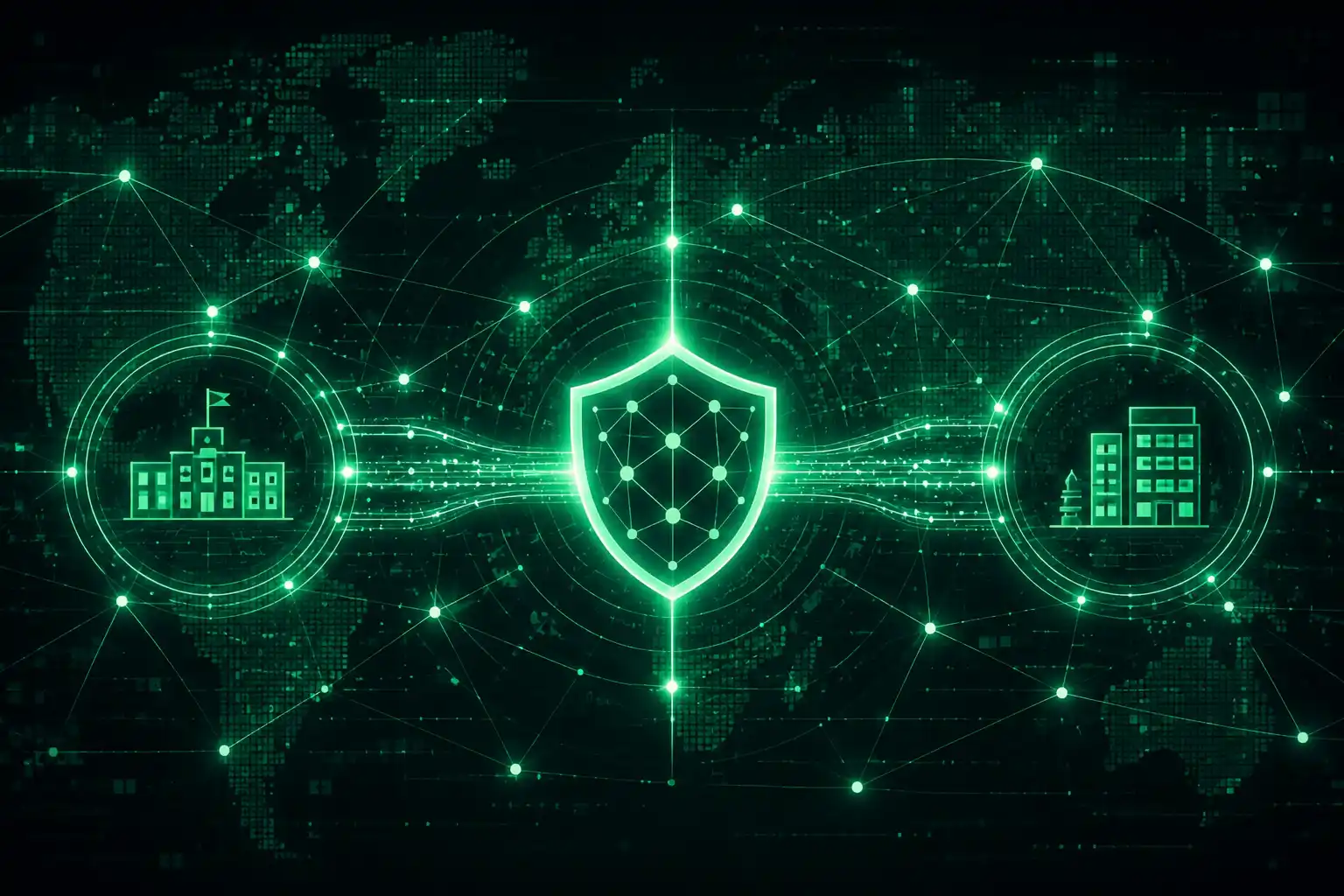
Secure federation enables users from separate organisations or security domains to communicate and collaborate while each participating organisation retains control over its own users, systems and information.

Rather than removing security boundaries in order to collaborate, federation provides a controlled way of working across those boundaries.

What is secure federation?

Secure federation is an approach that allows separate communications or collaboration environments to exchange information without requiring them to become a single network or security domain.

Each participating organisation can continue to operate its own infrastructure, identities, policies and security controls.

The federation layer provides the mechanism through which authorised users and information can interact.

A simple way to think about it is:

Federation connects collaboration environments without requiring the organisations behind them to surrender control of those environments.

This is particularly valuable in defence and government, where security boundaries may exist for very good reasons.

For example, two coalition partners may need to participate in the same operational discussion while continuing to manage their own users independently. Federation can provide a controlled relationship between those environments rather than requiring either organisation to move entirely onto the other’s infrastructure.

Why not simply put everyone on the same network?

In a conventional business environment, collaboration is often solved by giving people access to the same cloud platform or corporate network.

That approach becomes much more difficult in classified and mission-critical environments.

Participating organisations may have different:

  • security classifications
  • identity systems
  • accreditation requirements
  • national security policies
  • information-handling rules
  • infrastructure
  • access-control policies
  • operational responsibilities.

Some systems may also be isolated or air-gapped from public networks.

Creating one large shared environment could introduce unnecessary risk and make it harder for each organisation to maintain sovereignty over its users and data.

Secure federation provides a different model.

Instead of asking:

“How do we put everyone into the same system?”

the question becomes:

“How can independently controlled systems collaborate securely?”

That distinction is fundamental.

How does secure federation work?

At a high level, federation establishes trusted relationships between separate collaboration environments.

Each organisation remains responsible for its own users and infrastructure, while agreed mechanisms determine how information and collaboration can pass between participating environments.

This can include controls around identity, user attributes, information classification and entitlement.

A user does not necessarily gain unrestricted access simply because their organisation participates in the federation.

The system still needs to determine whether that individual should be permitted to access particular information or participate in a particular conversation.

This is where secure federation can work alongside technologies and security principles such as Attribute-Based Access Control (ABAC), data labelling and Zero Trust.

Instead of relying solely on someone’s location on a trusted network, access decisions can consider information about the user, their role, clearance, organisation and other relevant attributes.

Federation does not mean unrestricted information sharing

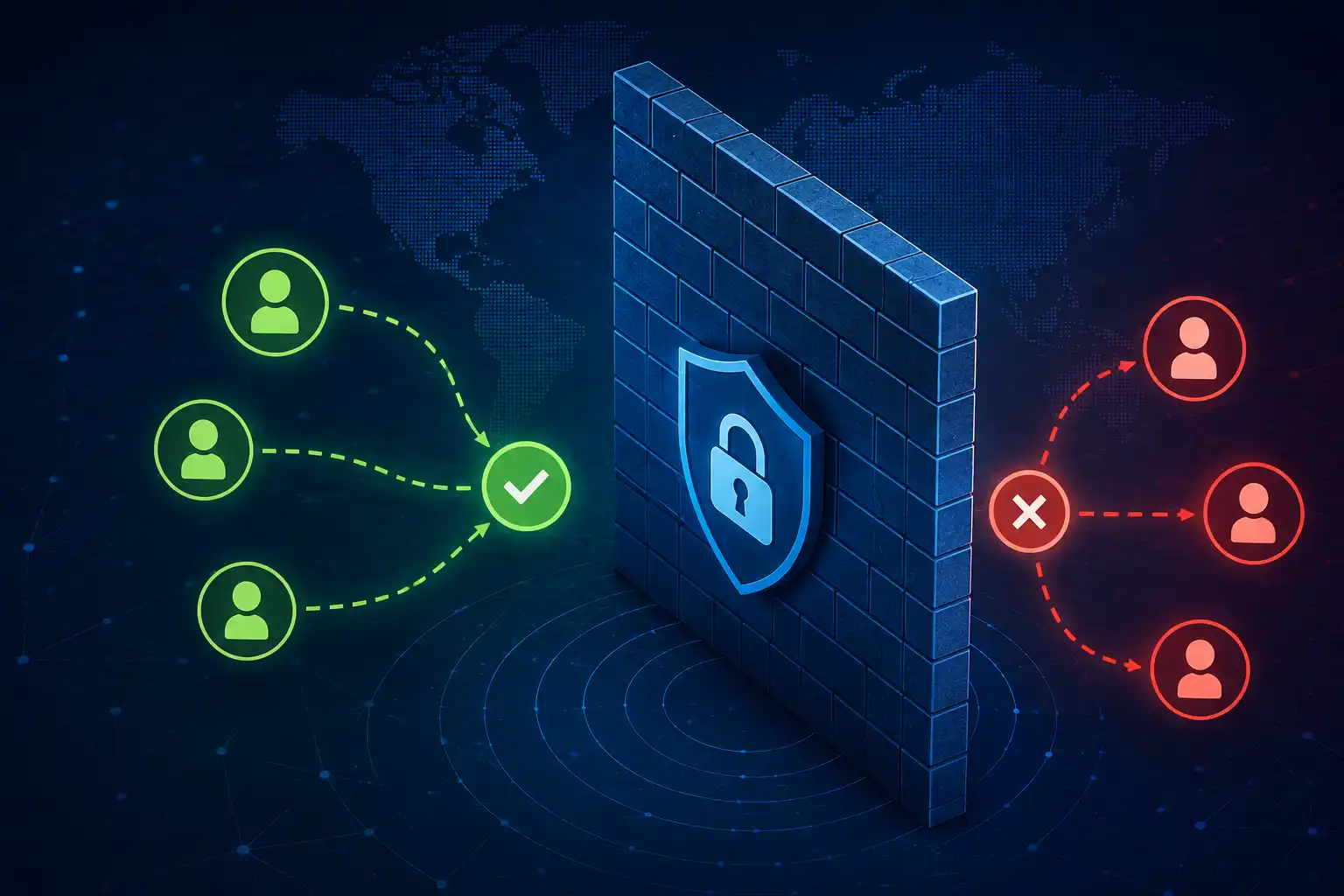
One of the most important principles of secure federation is that connectivity does not automatically equal access.

Creating a relationship between two environments should not mean that every user in one environment can see everything in the other.

Information can remain subject to strict controls.

For example, access may depend on factors such as:

  • security clearance
  • nationality
  • organisation
  • mission or project
  • operational role
  • need-to-know
  • information classification.

This supports a much more granular approach to collaboration.

A user may therefore be able to participate in one federated conversation but be excluded from another, even though both conversations exist within the wider collaboration environment.

This helps organisations collaborate without abandoning the principle of least privilege.

Secure federation and data sovereignty

Federation is also important because secure collaboration is not only about preventing unauthorised access.

It is about control.

Defence organisations and governments may need to retain authority over their own identities, infrastructure and information. They may not want another organisation - even a trusted mission partner - to become the central authority for their users.

Federation allows participating organisations to retain a degree of autonomy while still working together.

This can be particularly important in multinational and coalition operations.

Countries can contribute to a shared mission without necessarily transferring complete control of their communications infrastructure or user administration to another nation.

The result is a distributed collaboration model rather than a completely centralised one.

Secure federation in coalition operations

Coalition environments provide a clear example of why federation matters.

A modern operation might involve personnel from the UK, NATO allies, other coalition nations, government agencies and specialist partners.

Different participants may require access to different information.

Some information might be releasable to all coalition members. Other information might only be available to particular nations or groups of users.

At the same time, operational decisions may need to be made quickly.

Secure federation can help create the communications framework required for these groups to collaborate while maintaining appropriate boundaries around information.

Instead of building a completely new communications environment every time the composition of a mission changes, federation can help connect existing environments under defined policies.

That can make secure collaboration more flexible and better suited to changing operational requirements.

How does secure federation support Zero Trust?

Secure federation and Zero Trust are closely related, but they are not the same thing.

Zero Trust is based on the principle that access should not be granted simply because a user or device exists inside a supposedly trusted network.

Federation addresses a different problem: how independently managed environments can collaborate.

The two approaches complement each other.

A federated connection establishes a route through which collaboration can occur. Zero Trust principles help determine whether a particular user should actually be allowed to access a particular resource.

This distinction becomes especially important in classified environments.

Even within an air-gapped or otherwise highly protected network, not every user should automatically be entitled to every piece of information.

The network itself may be secure while individual information still needs to be restricted according to clearance, role and need-to-know.

Secure federation should therefore preserve security controls rather than bypassing them.

What is the relationship between secure federation and ABAC?

Attribute-Based Access Control (ABAC) provides a way of making access decisions using attributes associated with users, resources and their context.

These attributes might include a user’s organisation, nationality, role or security clearance.

Within a federated environment, this becomes particularly powerful.

Rather than treating every member of a partner organisation in exactly the same way, entitlement information can help determine what individual users are permitted to access.

This enables much finer control than simply deciding whether an organisation is trusted or untrusted.

Federation establishes the relationship between collaboration environments.

ABAC can help control what happens within that relationship.

Secure federation and Cross Domain Solutions

Secure federation should also be distinguished from a Cross Domain Solution (CDS).

The terms address related security challenges, but they are not interchangeable.

Federation primarily concerns controlled collaboration between independently managed environments.

A Cross Domain Solution is designed to enable information to move securely between different security domains, particularly where those domains operate at different classification levels.

For example, information may need to move from a SECRET environment into another domain with different security requirements. A CDS can enforce strict controls around that transfer.

In complex defence environments, federation and cross-domain technologies can form complementary parts of a broader secure information-sharing architecture.

The important point is that collaboration does not require security boundaries to disappear.

Technology can instead enable information to move between those boundaries under carefully defined controls.

Why real-time collaboration matters

Secure information sharing is only useful operationally if it can happen quickly enough to support the mission.

Traditional approaches can sometimes create a tension between security and usability. If sharing information requires complicated manual processes, users may struggle to communicate at operational speed.

Real-time secure messaging and persistent chat environments can help address this.

Users can communicate through familiar collaboration workflows while the underlying architecture applies the security controls required by the organisation.

This matters because collaboration systems are not simply repositories for information.

During an operation, conversations themselves can become part of the mission information environment.

Decisions, intelligence updates, tasking and situational awareness may all pass through messaging systems.

Securing those conversations is therefore just as important as securing files and databases.

MindLink and secure federation

MindLink is designed for secure, mission-critical collaboration in defence, government and other highly regulated environments.

Its federation capabilities enable organisations to extend real-time collaboration across independently managed environments while maintaining controls around users and information.

MindLink’s FRNIX federation protocol supports federated collaboration by enabling information and entitlement data to be exchanged between participating systems. This allows organisations to establish controlled collaboration relationships while retaining authority over their own environments.

Combined with capabilities such as data labelling, granular access control and deployment within highly secure infrastructure, federation enables collaboration to extend beyond the boundaries of an individual organisation without turning the entire mission environment into one unrestricted network.

This is particularly relevant to coalition and multi-agency operations, where participants need to work together but cannot simply abandon the security policies governing their own systems.

Collaboration without surrendering control

The fundamental benefit of secure federation is that it separates collaboration from centralisation.

Organisations do not necessarily need to surrender control of their users, networks or information in order to work effectively with mission partners.

Instead, independently managed environments can participate in a controlled collaboration architecture.

For defence and national security organisations, that distinction is increasingly important.

Modern missions demand faster information sharing across more organisations, more networks and more security boundaries.

The answer cannot simply be to remove those boundaries.

Secure federation provides another approach: connect the people who need to collaborate while preserving control over the information they are allowed to see.

That creates an environment in which security and collaboration are not competing objectives, but complementary parts of the same architecture.

Frequently Asked Questions

What is secure federation?

Secure federation enables separate organisations or collaboration environments to communicate while retaining control of their own users, systems and security policies. It creates trusted, controlled relationships between independently managed environments rather than requiring everyone to join a single network.

Why is secure federation important for defence?

Defence operations frequently involve multiple military services, government agencies, coalition nations and other mission partners. Federation enables these groups to collaborate while maintaining appropriate security, organisational and national boundaries.

Does federation give every connected user access to the same information?

No. Federation provides the ability for environments to collaborate, but access can still be restricted according to factors such as security clearance, organisation, nationality, role, mission and need-to-know.

Is secure federation the same as Zero Trust?

No. Federation enables separately managed environments to collaborate, while Zero Trust is a security approach in which users and devices are not automatically trusted simply because of their network location. The two approaches can work together.

How does ABAC work with secure federation?

Attribute-Based Access Control can use information such as a user’s role, organisation, nationality or security clearance when making access decisions. Within a federated environment, these attributes can help ensure that users only receive information they are authorised to access.

Is secure federation the same as a Cross Domain Solution?

No. Secure federation primarily enables controlled collaboration between independently managed environments. Cross Domain Solutions are specifically designed to control information transfer between different security domains, often involving different classification levels. The technologies can be complementary.

Can secure federation be used on classified networks?

Yes. Federation can be particularly valuable in classified and mission-critical environments where organisations need to collaborate without merging their networks or giving up control over users and information.

What is FRNIX?

FRNIX is MindLink’s federation protocol for secure collaboration. It supports the exchange of messaging and entitlement information between federated environments, helping organisations collaborate while applying controls over who can access information.


Related Articles

What Is Secure Mission-Critical Collaboration? | MindLink

What Is Secure Mission-Critical Collaboration? | MindLink

In today’s connected world, collaboration platforms have become an essential part of daily business operations. From instant messaging and video...

Read More
Zero Trust Collaboration Explained | Secure Information Sharing

Zero Trust Collaboration Explained | Secure Information Sharing

As organisations increasingly rely on digital collaboration, the challenge is no longer simply enabling teams to communicate—it is ensuring that...

Read More
What Is Data Sovereignty? | Classified Data Sharing

What Is Data Sovereignty? | Classified Data Sharing

Defence, intelligence and government organisations increasingly need to share information across organisational, national and security boundaries....

Read More