5 min read

What Is Secure Mission-Critical Collaboration? | MindLink

What Is Secure Mission-Critical Collaboration? | MindLink

In today’s connected world, collaboration platforms have become an essential part of daily business operations. From instant messaging and video conferencing to document sharing and project management, organisations rely on digital collaboration tools to communicate and make decisions quickly.

For many organisations, however, conventional collaboration platforms are simply not secure enough.

Defence organisations, government agencies, intelligence communities, critical national infrastructure operators and highly regulated industries often work with information that, if exposed or altered, could have severe operational, financial or even national security consequences. These organisations require something far more robust than standard enterprise messaging applications.

This is where secure mission-critical collaboration comes in.

Rather than focusing solely on productivity, secure mission-critical collaboration combines resilient communications with advanced security controls, ensuring that sensitive information is shared only with authorised individuals while maintaining operational effectiveness in even the most demanding environments.


Defining Secure Mission-Critical Collaboration

Secure mission-critical collaboration refers to communication and information-sharing platforms specifically designed for environments where security, reliability and availability are fundamental operational requirements.

Unlike consumer messaging applications or standard business collaboration software, mission-critical platforms are built to ensure that:

  • Sensitive information remains protected throughout its lifecycle.
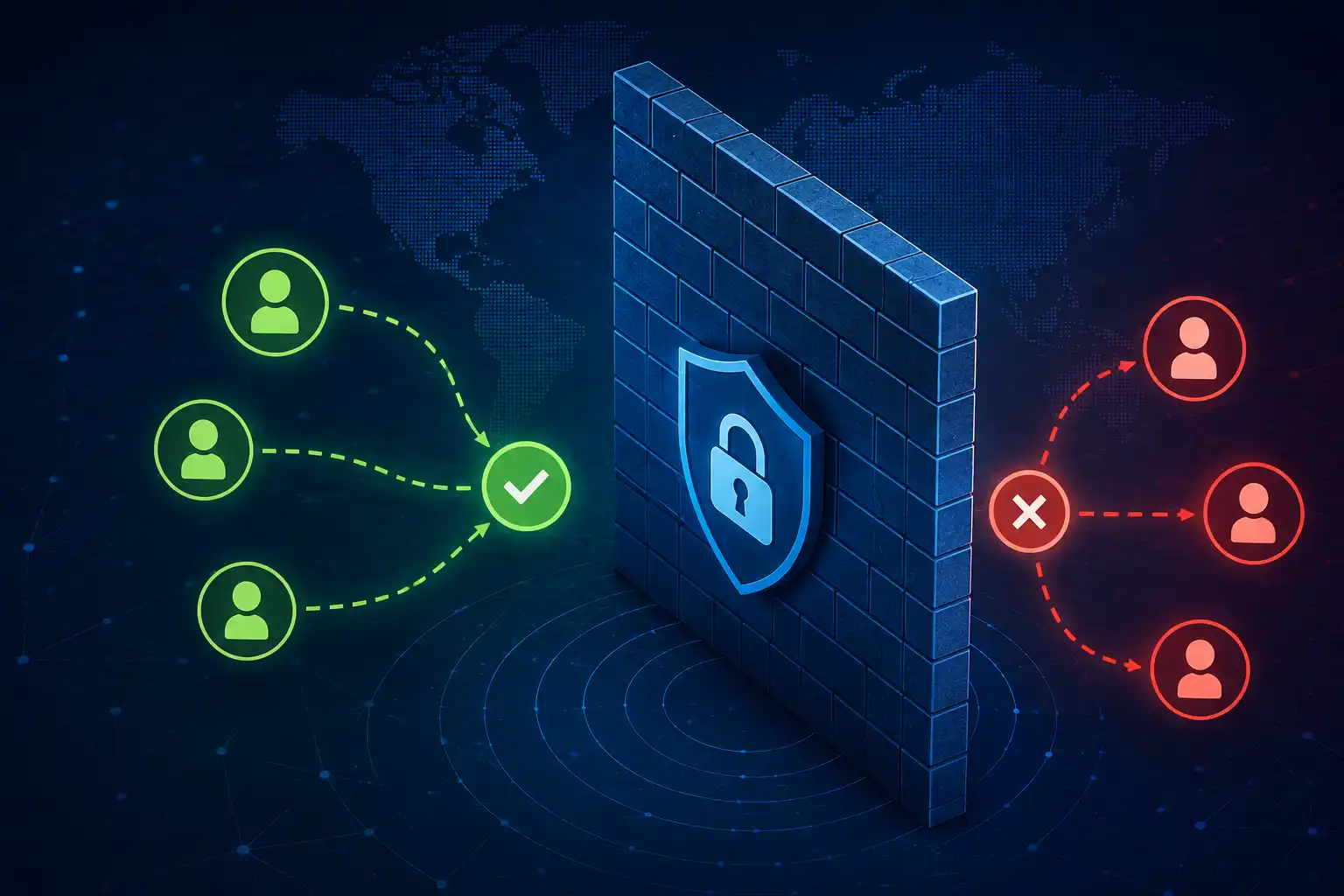
  • Users only access information they are authorised to see.
  • Communications remain available during crises or degraded network conditions.
  • Organisations maintain full control over their own data.
  • Security policies travel with the information itself rather than relying solely on network boundaries.

The objective is not simply to encrypt messages but to enable trusted collaboration between individuals, teams, organisations and coalition partners while maintaining strict control over information.


Why Traditional Collaboration Platforms Are Not Enough

Popular collaboration platforms are designed primarily for convenience and productivity.

For most commercial organisations, this approach is entirely appropriate.

However, organisations responsible for national security, emergency response or critical infrastructure face very different challenges.

They often need to:

  • Handle classified or highly sensitive information.
  • Collaborate across multiple organisations.
  • Operate on private or disconnected networks.
  • Maintain strict audit trails.
  • Enforce “need-to-know” access policies.
  • Continue operating during cyber attacks or network outages.

Traditional cloud collaboration platforms generally assume that users operate within trusted environments and that identity alone determines access.

Mission-critical environments demand much more granular control.


Information Must Remain Protected Wherever It Goes

One of the biggest differences between conventional collaboration and secure mission-critical collaboration is how information is protected.

Traditional security models often focus on protecting the network perimeter.

Once users are inside the network, they may have broad access to information.

Modern cyber threats have shown that this approach is no longer sufficient.

Instead, secure mission-critical collaboration adopts a data-centric security approach.

This means security remains attached to the information itself.

Policies governing who can view, edit, forward or share information travel with the data wherever it moves.

Even if information leaves its original environment, security controls continue to apply.


Zero Trust Principles

Many secure collaboration platforms now incorporate Zero Trust principles.

Zero Trust assumes that no user, device or network should be automatically trusted.

Instead, every request to access information must be continually verified based on multiple factors including:

  • User identity
  • Security clearance
  • Device status
  • Location
  • Operational role
  • Mission context
  • Information classification

This significantly reduces the risk of unauthorised access while allowing organisations to collaborate more securely across departments and partner organisations.


Need-to-Know Information Sharing

Not every authorised user should automatically see every piece of information.

Mission-critical collaboration platforms enforce need-to-know access controls.

For example:

A military planning document may be accessible only to personnel assigned to a specific operation.

An intelligence report may be available only to analysts with the correct clearance and operational role.

Emergency response information may be shared only with agencies actively involved in the incident.

These controls help minimise accidental disclosure while ensuring the right people receive the information they need.


Supporting High-Security Environments

Secure mission-critical collaboration is commonly used within environments including:

  • Defence organisations
  • Government departments
  • Intelligence agencies
  • Emergency services
  • Police forces
  • Critical national infrastructure
  • Energy providers
  • Transport networks
  • Healthcare organisations
  • Financial institutions

Although each sector has unique operational requirements, they all share one common objective:

Protect sensitive information while enabling rapid decision-making.


Working Across Organisational Boundaries

Today’s operations rarely involve a single organisation.

Military operations often involve coalition partners.

Emergency incidents require coordination between multiple agencies.

Critical infrastructure operators collaborate with suppliers, regulators and government departments.

Secure mission-critical collaboration platforms enable this cooperation without compromising security.

Rather than copying sensitive information into less secure systems, organisations can enforce policies that control precisely what each participant can access.


Resilience During Operational Disruption

Mission-critical systems must continue operating when conventional systems fail.

They may need to function during:

  • Cyber attacks
  • Communications outages
  • Natural disasters
  • Military operations
  • Remote deployments
  • Degraded network environments

Many secure collaboration platforms are therefore designed to operate across:

  • On-premise infrastructure
  • Private cloud
  • Hybrid environments
  • Air-gapped networks
  • Tactical deployments
  • Low-bandwidth communications

This resilience is essential when communications directly support operational decision-making.


Data Sovereignty Matters

Many organisations cannot legally or operationally store sensitive information within public cloud environments.

They require complete ownership of:

  • Their infrastructure
  • Their encryption keys
  • Their identity services
  • Their security policies
  • Their stored information

Secure mission-critical collaboration platforms often support fully self-hosted deployments, allowing organisations to retain complete control over their data and comply with national regulations and internal security requirements.


Beyond Encryption

Encryption is an essential component of secure collaboration—but it is only one layer of protection.

Modern threats include:

  • Insider threats
  • Compromised user accounts
  • Malware
  • Supply chain attacks
  • Credential theft
  • Human error

Simply encrypting communications does not prevent authorised users from accidentally sharing sensitive information with the wrong people.

Mission-critical collaboration therefore combines encryption with:

  • Information labelling
  • Attribute-based access controls
  • Policy enforcement
  • Audit logging
  • Secure identity management
  • Continuous authorisation

Together, these measures create multiple layers of protection.


Supporting Compliance

Many organisations operate under strict regulatory or defence standards.

Secure mission-critical collaboration platforms may support compliance with standards relating to:

  • Government security frameworks
  • Defence information-sharing policies
  • NATO interoperability
  • Information classification
  • Data protection
  • Audit and accountability requirements

Supporting these standards enables organisations to collaborate more effectively while maintaining compliance with their security obligations.


Improving Operational Decision-Making

Security should never become an obstacle to effective operations.

Instead, secure collaboration should enable faster, better-informed decisions.

By ensuring trusted users receive accurate information quickly while preventing unauthorised disclosure, organisations can:

  • Reduce operational delays.
  • Improve situational awareness.
  • Increase confidence in shared information.
  • Strengthen coordination across teams.
  • Respond more effectively during critical incidents.

The result is improved operational effectiveness without compromising security.


The Future of Secure Collaboration

As cyber threats continue to evolve, collaboration platforms must evolve with them.

Future secure mission-critical collaboration solutions are likely to place even greater emphasis on:

  • Data-centric security
  • Zero Trust architectures
  • Attribute-Based Access Control (ABAC)
  • Cross-domain information sharing
  • Artificial intelligence-assisted security monitoring
  • Secure coalition collaboration
  • Policy-driven information sharing
  • Digital sovereignty

Rather than relying on secure networks alone, future systems will increasingly ensure that every individual piece of information carries its own security controls wherever it is shared.


Why Secure Mission-Critical Collaboration Is Becoming Essential

The digital landscape has changed dramatically over the past decade.

Organisations are expected to collaborate across multiple locations, agencies and international partners while facing increasingly sophisticated cyber threats.

The traditional model of protecting only the network perimeter is no longer enough.

Secure mission-critical collaboration represents a more resilient approach—one that places security at the heart of communication without sacrificing usability or operational efficiency.

By combining resilient communications, data-centric security, Zero Trust principles and fine-grained access controls, organisations can collaborate confidently, even when handling their most sensitive information.

For defence organisations, governments, critical infrastructure providers and regulated industries, secure mission-critical collaboration is rapidly becoming an operational necessity rather than simply another technology choice.


Frequently Asked Questions

What is secure mission-critical collaboration?

Secure mission-critical collaboration is a communications approach designed for organisations that handle highly sensitive information. It enables authorised users to communicate and share information securely while maintaining strict controls over who can access, edit and distribute that information.


Who needs secure mission-critical collaboration?

It is commonly used by defence organisations, government departments, intelligence agencies, emergency services, critical national infrastructure operators, healthcare providers and other organisations where information security is essential to operational success.


How is mission-critical collaboration different from standard collaboration software?

Standard collaboration software focuses primarily on productivity and ease of use. Mission-critical collaboration adds advanced security features such as data-centric security, Zero Trust principles, attribute-based access controls, information labelling, auditing and resilient deployment options.


Why isn’t encryption alone enough?

Encryption protects information during transmission and storage, but it does not control what authorised users do with that information after they access it. Mission-critical collaboration combines encryption with policy enforcement, access controls and continuous authorisation to provide multiple layers of protection.


What is data-centric security?

Data-centric security protects the information itself rather than relying solely on network security. Security policies remain attached to the data wherever it is stored or shared, ensuring ongoing protection throughout its lifecycle.


Can secure mission-critical collaboration support coalition or multi-agency operations?

Yes. Modern secure collaboration platforms are designed to enable trusted information sharing between organisations while enforcing strict access controls, helping coalition partners and multi-agency teams collaborate without compromising security.


Can secure collaboration operate on private or air-gapped networks?

Many secure mission-critical collaboration platforms support deployment on private cloud, on-premise infrastructure, hybrid environments and air-gapped networks, allowing organisations to retain complete control over sensitive information while meeting operational and regulatory requirements.

Zero Trust Collaboration Explained | Secure Information Sharing

Zero Trust Collaboration Explained | Secure Information Sharing

As organisations increasingly rely on digital collaboration, the challenge is no longer simply enabling teams to communicate—it is ensuring that...
Read More