
What Is Data-Centric Security? | MindLink
For many years, cybersecurity focused on protecting the network.
8 min read
Admin : Aug 25, 2026, 10:01:52 AM
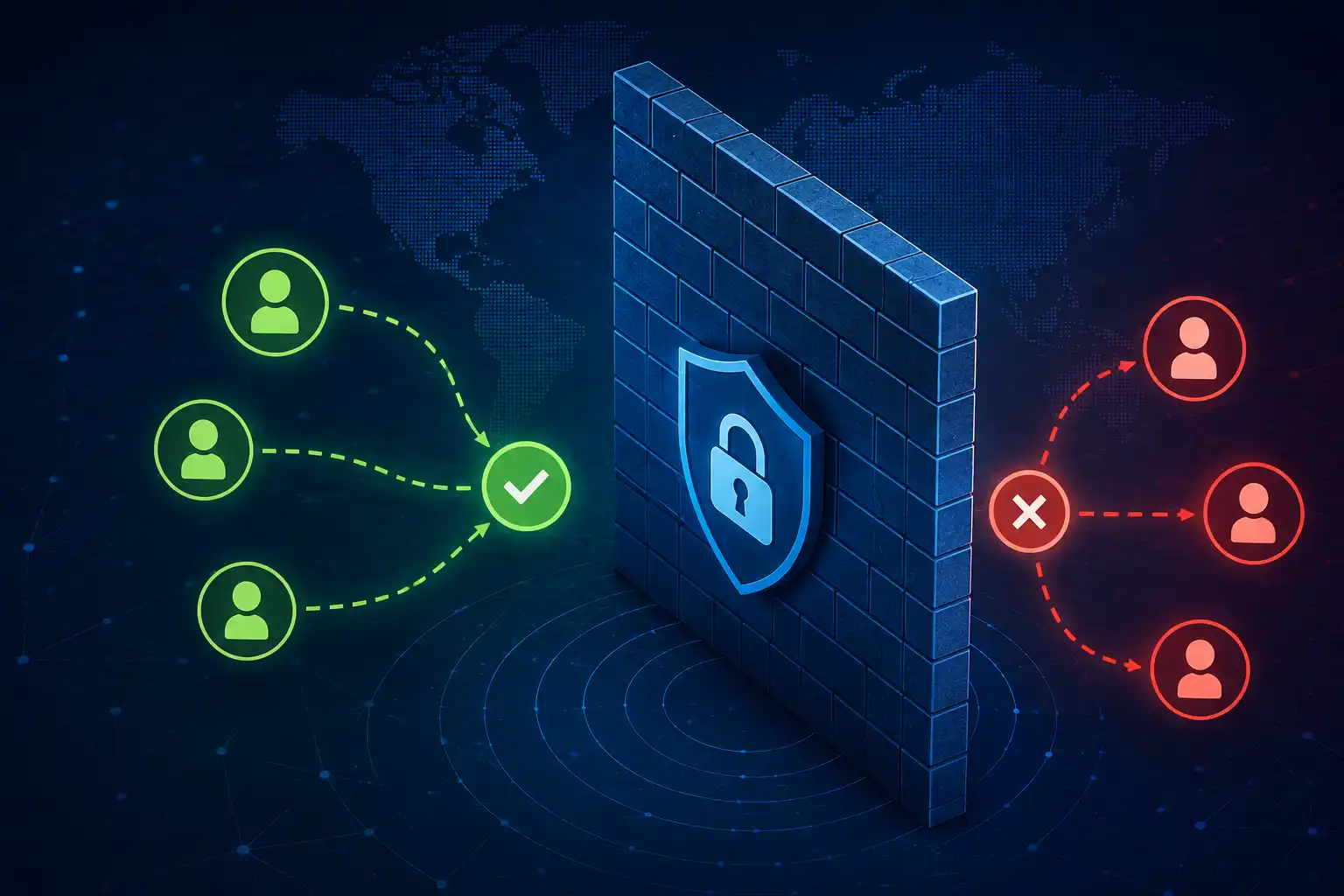
Modern defence, government and national security operations depend on people being able to communicate quickly across teams, organisations and security domains. But giving users access to the same collaboration environment does not necessarily mean they should be able to communicate freely with everyone inside it.
A user may be authorised to access a network while still being restricted from particular conversations, projects, organisations or categories of information. Coalition partners may need to work together without gaining visibility of information intended only for another nation. Contractors may require access to a programme without being able to communicate with competing suppliers. Personnel working across multiple projects may need different permissions depending on the context.
This is where ethical walling becomes important.
Ethical walling creates policy-controlled information barriers within a collaboration environment, helping organisations determine who can communicate, what information can be shared and where those interactions are permitted.
For secure and classified environments, it provides an important additional layer of control between simply allowing access to a system and allowing unrestricted access to the information and people within it.
Ethical walling is a security mechanism that creates controlled boundaries between users, groups or organisations within a shared system.
Sometimes referred to as an ethical wall, information barrier or information wall, the principle originated in environments where organisations needed to prevent conflicts of interest or inappropriate information exchange between different teams.
In secure collaboration, the same concept can be applied much more broadly.
Rather than assuming that every authenticated user should be able to communicate with every other authenticated user, ethical walling allows administrators to define policies determining which interactions are permitted.
For example, an organisation could allow:
At the same time, policy could prevent direct communication between Organisation A and Organisation C.
Users can therefore operate within the same wider collaboration environment without automatically gaining unrestricted access to one another.
Traditional network security has often concentrated on controlling entry into a system.
Once a user has been authenticated and granted access, however, there is another question:
What should that user be allowed to do once they are inside?
This distinction is particularly important in defence, intelligence and government environments.
A classified network might contain thousands of legitimate users. Each person may have valid credentials and an appropriate security clearance to access the network, but that does not necessarily mean they should have access to every conversation or piece of information available within it.
Information may also be restricted according to factors beyond its overall classification.
Access might depend upon:
Ethical walling helps enforce these boundaries at the collaboration layer.
This means security does not stop when somebody successfully logs into the network. Controls continue to govern how that individual can interact with other users and information.
Ethical walling and access control are closely related, but they solve slightly different problems.
Traditional access control determines whether a user is permitted to access a particular resource. This might include a network, application, document, chat room or service.
Ethical walling goes further by controlling relationships and interactions between authorised users.
Consider two users who are both authorised to access the same secure collaboration platform.
Traditional authentication might confirm that both users are legitimate and allow them onto the system.
An ethical wall policy could still prevent those two users from communicating directly with one another.
This makes ethical walling particularly valuable in complex environments where multiple organisations, missions and security communities share infrastructure.
The objective is not simply to keep unauthorised users outside. It is also to maintain appropriate boundaries between authorised users inside.
Ethical walling applies predefined security policies to communications within a collaboration platform.
These policies can determine whether users are allowed to communicate through channels such as:
Policies can be based on relatively simple organisational rules or much more granular combinations of user attributes.
A straightforward policy might state that users belonging to one organisation cannot communicate directly with users belonging to another.
More sophisticated policies could allow exceptions according to role, project or mission membership.
For example, two organisations might normally be separated by an information barrier, but selected personnel from both organisations could be permitted to collaborate within an approved joint programme.
The security policy therefore follows the operational requirement rather than forcing organisations to create completely separate communication infrastructures for every possible group of users.
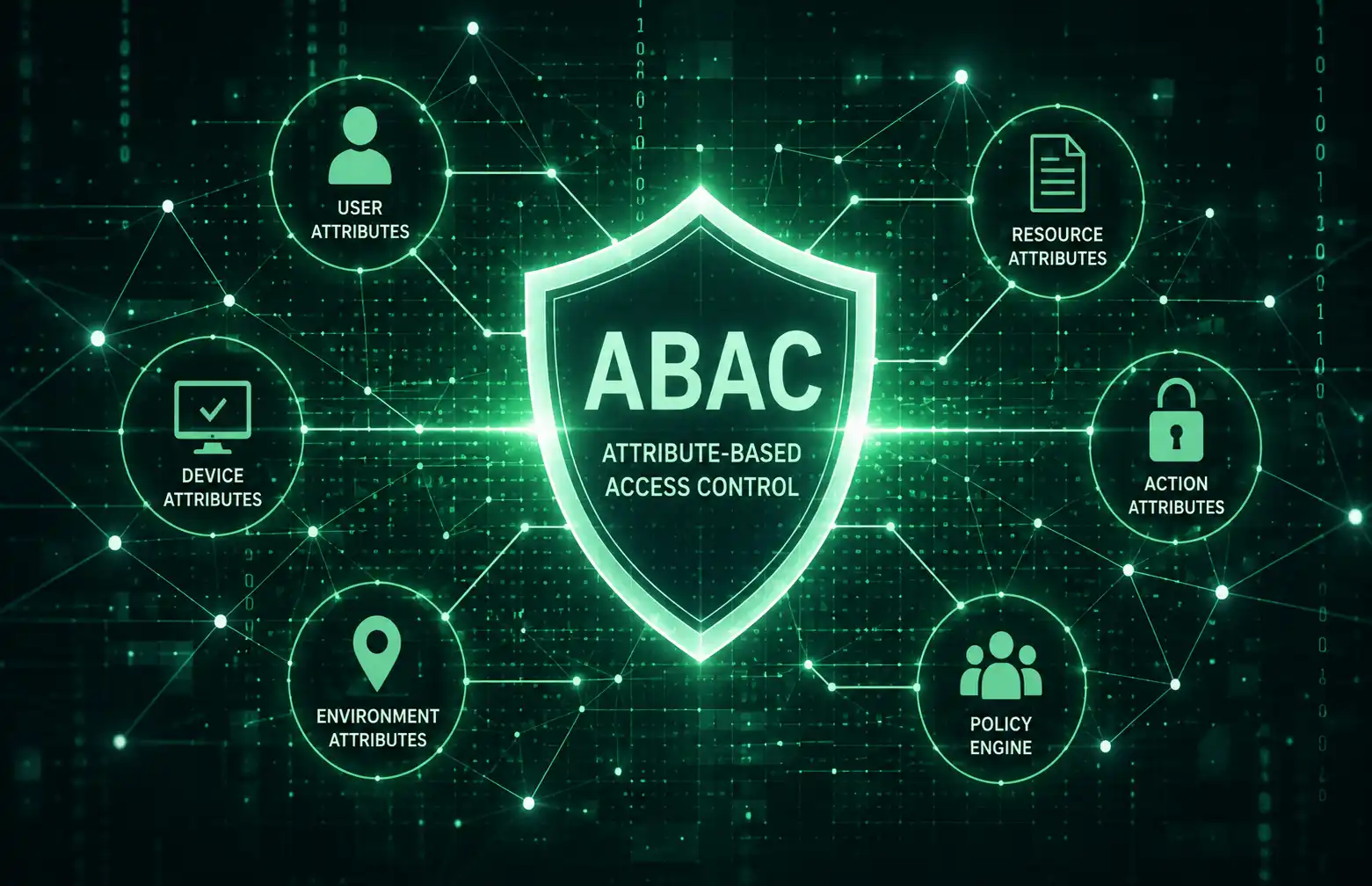
Ethical walling becomes particularly powerful when combined with Attribute-Based Access Control (ABAC).
Rather than making access decisions based solely on a user’s identity, ABAC evaluates attributes associated with the user, resource and operational context.
These attributes might include:
Policies can then make much more granular decisions about whether a particular interaction should be permitted.
Instead of a simple rule saying:
User A can communicate with User B
a policy might effectively state:
Users belonging to these organisations may communicate only when they are assigned to the same authorised mission and meet the required security conditions.
This allows collaboration controls to reflect real-world operational structures more accurately.
For organisations managing large numbers of users across changing missions and coalitions, attribute-driven policy can also be considerably more scalable than maintaining individual permissions manually.
Multi-tenant environments create a particularly important use case for ethical walling.
A single collaboration platform may support multiple organisations, agencies, contractors or operational groups. Sharing infrastructure can improve interoperability and simplify collaboration, but it must not result in every tenant automatically gaining visibility of every other tenant.
Ethical walling allows organisations to create logical security boundaries within that shared environment.
For example, a defence programme might involve government personnel, military users, technology suppliers and specialist subcontractors.
Everyone may need access to the wider collaboration environment.
But they may not all need to communicate directly with one another.
Ethical wall policies can restrict those relationships while still allowing authorised collaboration where operationally necessary.
MindLink has supported this type of multi-tenant ethical walling for secure chat, enabling administrators to apply granular communication policies between organisations and users within shared collaboration environments.
This provides a practical way to gain the benefits of shared infrastructure without removing the organisational boundaries that protect sensitive information.
The requirement becomes even more significant when collaboration extends beyond a single organisation or network.
Secure federation allows separate organisations or security environments to collaborate while retaining control over their own users, infrastructure and policies.
Ethical walling can provide an additional layer of control within that federated environment.
An organisation might permit federation with a trusted partner without wanting every user on both sides to communicate freely.
Policies can determine exactly which communities are allowed to interact.
This creates a more controlled model of interoperability.
Rather than treating federation as a simple binary choice — connected or disconnected — organisations can establish granular rules governing what collaboration is permitted across the connection.
For defence and coalition operations, this can be particularly valuable. Partners can communicate where required for the mission while maintaining boundaries around national, organisational or classified information.
Ethical walling also supports the wider shift towards data-centric security.
Traditional security architectures have often relied heavily on protecting the network perimeter. Once information was inside a trusted environment, users and systems within that environment could sometimes be treated as inherently trustworthy.
Modern security models increasingly reject that assumption.
Security controls need to remain associated with users, information and policy even within trusted or highly secure networks.
An organisation may operate an air-gapped classified network, for example, but that does not mean everyone connected to that network should automatically have access to all information within it.
There may already be multiple security communities operating inside the same environment.
Ethical walling helps maintain separation between those communities while still allowing controlled collaboration when policy permits it.
This complements both Zero Trust security and data-centric approaches to information protection.
Zero Trust is based on the principle that access should not be granted simply because a user or device is located inside a trusted network.
Every interaction should be evaluated according to identity, policy and context.
Ethical walling applies a similar principle to collaboration.
Being authenticated onto a collaboration platform does not automatically provide permission to communicate with everyone else using that platform.
Instead, communication can be explicitly permitted according to policy.
This helps organisations move away from broad assumptions of trust towards a model in which access and interaction are continuously constrained according to operational requirements.
Ethical walling should therefore not be viewed as an alternative to Zero Trust. It can form part of the mechanisms used to implement Zero Trust principles within real-time communications.
Ethical walling has applications wherever sensitive organisations need to collaborate without removing the boundaries between them.
Multiple nations may need to communicate during a joint mission while retaining control over nationally restricted information.
Ethical walls can create communication boundaries between national communities while allowing approved coalition groups to work together.
Government agencies frequently work with defence primes, technology companies and specialist suppliers.
A shared collaboration environment can improve operational efficiency, while ethical walls prevent inappropriate communication or information exchange between suppliers.
Two contractors may participate in the same programme but be commercial competitors.
Both might need to communicate with the government customer without being permitted to communicate directly with one another.
Ethical walling can enforce this separation.
Personnel within the same organisation may work across programmes with different information restrictions.
Access can be governed according to project or mission membership rather than simply organisational identity.
Where information is exchanged between different security domains, ethical walling can complement Cross Domain Solutions by helping control how authorised users collaborate once information reaches the permitted environment.
Modern missions increasingly involve interconnected communities rather than isolated organisations.
Defence forces work with allies. Government agencies collaborate with industry. Intelligence is shared across departments. Contractors operate alongside military personnel. Mission teams can form rapidly and change just as quickly.
Creating completely separate communications infrastructure for every possible combination of users would be difficult to manage and could inhibit operational effectiveness.
At the other extreme, giving every authorised user unrestricted communication with every other user introduces unnecessary security risk.
Ethical walling provides a middle ground.
It allows organisations to build shared collaboration environments while maintaining precise control over the relationships within them.
The result is not unrestricted information sharing, but controlled information sharing.
That distinction is fundamental to secure collaboration.
MindLink provides secure real-time collaboration technology designed for defence, government and other mission-critical environments.
By supporting granular security policies, multi-tenant collaboration and controlled federation, MindLink enables organisations to determine how different users and communities can communicate without relying solely on network-level separation.
Ethical walling can help maintain boundaries between organisations, projects and security communities while still allowing authorised users to collaborate efficiently.
Combined with technologies and approaches such as Attribute-Based Access Control, secure federation, data-centric security, Zero Trust and Cross Domain Solutions, these controls help organisations create collaboration environments in which information can move where it is required without becoming universally accessible.
For modern defence and national security operations, the objective is not simply to connect more people.
It is to connect the right people, to the right information, under the right security policy.
An ethical wall is a policy-controlled information barrier that prevents specified users, groups or organisations from communicating or sharing information with one another. In secure collaboration environments, ethical walls can restrict interactions between authorised users even when they have access to the same underlying platform.
Ethical walls are also commonly referred to as information barriers or information walls. The terminology varies between industries, but the underlying principle is the controlled separation of users or information to prevent unauthorised exchange.
Ethical walling in secure collaboration involves applying security policies that determine which users or groups are permitted to communicate. Policies may restrict direct messages, group conversations or other forms of collaboration according to organisation, role, project, nationality, clearance or other attributes.
Yes. Access to the same classified network does not necessarily mean every user should have access to the same information or communications. Ethical walling, access controls and data-centric security policies can help maintain separation between different communities within the same wider environment.
Multi-tenant ethical walling creates controlled communication boundaries between different organisations or groups using the same collaboration infrastructure. It allows selected tenants to collaborate while preventing unauthorised interactions between others.
Attribute-Based Access Control can provide the policy information used to make ethical wall decisions. Rather than relying only on individual identities, policies can consider attributes such as organisation, nationality, clearance, role or project membership when deciding whether communication should be permitted.
Ethical walling can support a Zero Trust architecture by ensuring that authentication alone does not provide unrestricted communication privileges. Each interaction can be governed according to defined policy rather than assuming trust simply because both users are inside an authorised environment.
Secure federation connects separate organisations or collaboration environments. Ethical walling can restrict which users or communities are permitted to interact across that federation, enabling organisations to collaborate without providing unrestricted access between their entire user populations.
Defence environments frequently involve different nations, agencies, contractors, missions and security communities operating together. Ethical walling allows authorised collaboration to take place while maintaining boundaries around sensitive or restricted information.
A firewall primarily controls network traffic between systems or networks. An ethical wall controls permitted relationships or information exchange between users and groups. Both can contribute to security, but they operate at different layers and address different types of risk.

For many years, cybersecurity focused on protecting the network.

Modern defence, government and national security operations rarely take place within the boundaries of a single organisation or network. Missions...
As organisations become increasingly connected, controlling who can access sensitive information has become one of the biggest challenges in...