5 min read

What Is Data-Centric Security? | MindLink

What Is Data-Centric Security? | MindLink

For many years, cybersecurity focused on protecting the network.

Firewalls, VPNs, endpoint security and network segmentation were designed to keep attackers out and sensitive information safely inside. This approach made sense when data rarely left the organisation’s own infrastructure.

Today, however, data is constantly moving.

It flows between cloud services, mobile devices, partner organisations, multiple security domains and geographically dispersed teams. In defence and government environments, sensitive information may also need to move between different security classifications and coalition partners.

As organisations become increasingly connected, protecting the network alone is no longer enough.

The information itself has become the asset that needs protecting.

This is the principle behind data-centric security.

Unlike traditional cybersecurity approaches that focus on where the data is stored, data-centric security ensures that protection remains attached to the information itself—wherever it travels and whoever attempts to access it.


What Is Data-Centric Security?

Data-centric security is a cybersecurity approach that protects information throughout its entire lifecycle, regardless of where that information is stored, shared or accessed.

Instead of relying solely on network boundaries, data-centric security applies security policies directly to the data.

That means protection remains in place whether information is:

  • Stored on a server
  • Shared with another organisation
  • Accessed from a different device
  • Moved between security domains
  • Archived for future use

The fundamental question changes from:

“Is this user on a trusted network?”

to:

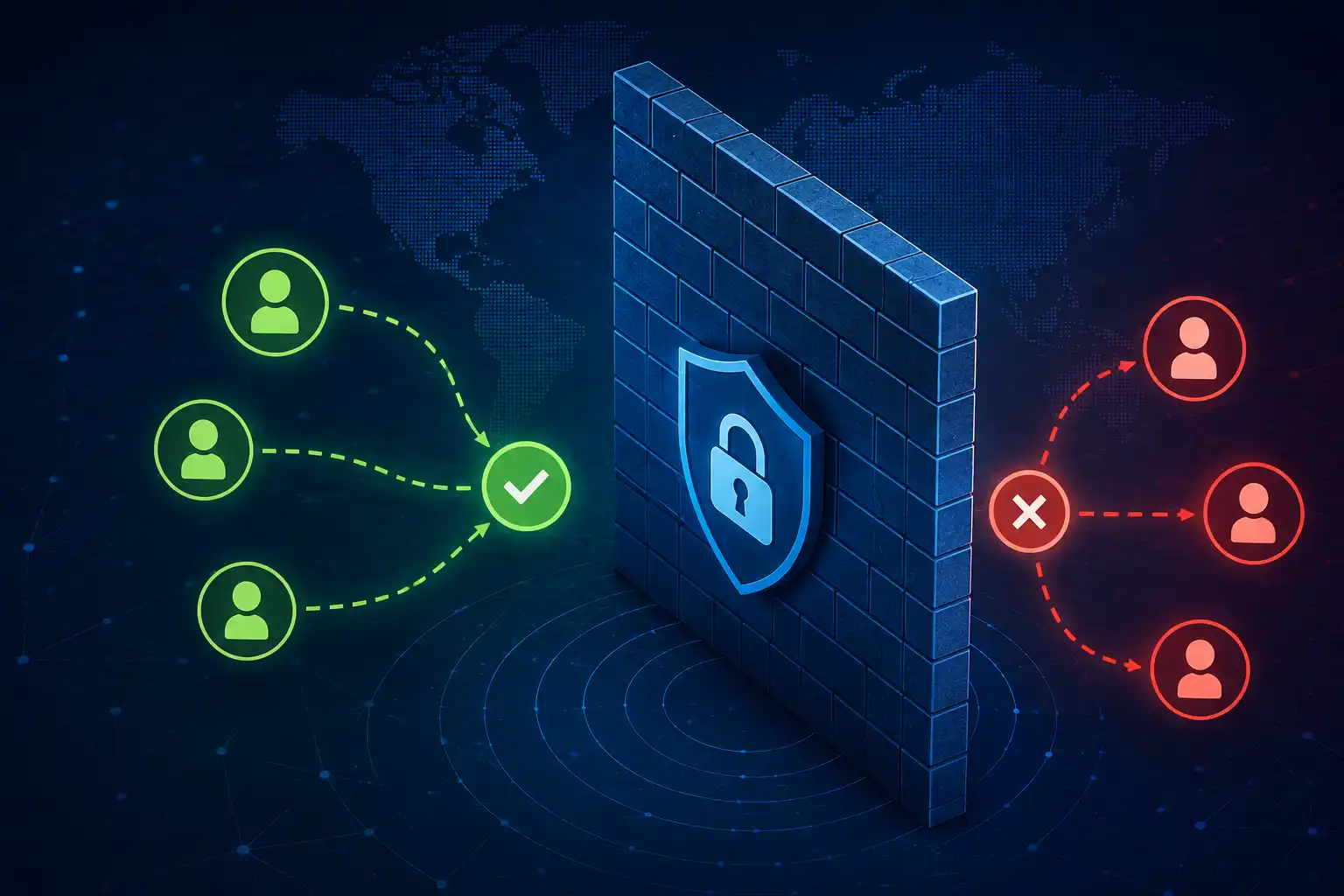
“Should this individual be allowed to access this specific information under these circumstances?”

The focus shifts from protecting infrastructure to protecting information.


Why Traditional Network Security Is No Longer Enough

Traditional cybersecurity assumes that once someone has successfully entered a trusted network, they can generally be trusted.

This model worked well when organisations operated within clearly defined network boundaries.

Modern organisations no longer do.

Today’s information may move between:

  • Cloud platforms
  • Mobile devices
  • Remote users
  • Multiple security classifications
  • Partner organisations
  • Government agencies
  • Coalition networks

The network perimeter has become increasingly blurred.

Even highly secure environments cannot rely solely on network security because the greatest challenge is often determining who should be allowed to see specific information, rather than simply preventing someone from entering the network.


Air-Gapped Networks Still Need Data-Centric Security

One of the biggest misconceptions in cybersecurity is that an air-gapped network automatically solves every security problem.

An air-gapped network is physically isolated from external networks and the internet, making it significantly harder for external attackers to gain access.

However, isolation does not automatically protect information from being viewed by the wrong people inside that network.

Within defence, intelligence and government organisations, hundreds or even thousands of authorised users may legitimately work on the same classified network.

Every one of those users may have permission to access the network itself.

That does not mean they should all have access to the same information.

An engineer supporting one programme may have no operational requirement to view intelligence relating to another mission.

A contractor may possess the appropriate security clearance but not be assigned to a particular project.

An employee may change roles or responsibilities.

Someone could even gain access to an unlocked workstation.

Simply trusting the network—or even trusting the device—is no longer sufficient.

This is where data-centric security becomes essential.

Instead of assuming that every authenticated device represents the correct user with the appropriate permissions, access decisions are based on the information being requested and the identity and attributes of the individual requesting it.

This reinforces the long-established defence principle of need to know.

Even within highly classified or completely isolated environments, individuals should only be able to access information they have both the clearance and the operational requirement to see.


How Data-Centric Security Works

Although implementations vary between organisations, most data-centric security solutions combine several complementary technologies.

Data Classification

Information is classified according to its sensitivity.

Examples include:

  • OFFICIAL
  • SECRET
  • TOP SECRET
  • NATO security classifications
  • Project-specific labels
  • Operational sensitivity markings

These classifications help determine how the information should be handled.


Persistent Data Protection

Rather than protecting only the storage location, security remains attached to the information itself.

This may include:

  • Encryption
  • Usage policies
  • Digital rights management
  • Access expiry
  • Revocable permissions
  • Audit logging

Even when information moves between systems, many of these protections continue to apply.


Identity Verification

Access begins by confirming who the individual actually is.

This may involve:

  • Multi-factor authentication
  • Smart cards
  • Security certificates
  • Hardware tokens
  • Federated identity services

Importantly, the identity of the user—not simply the identity of the device—is verified before access is granted.


Attribute-Based Access Control (ABAC)

Modern data-centric security increasingly relies on Attribute-Based Access Control (ABAC).

Instead of granting broad permissions based solely on job title, ABAC evaluates multiple attributes every time information is requested.

These may include:

  • Security clearance
  • Organisation
  • Nationality
  • Mission assignment
  • Current role
  • Device compliance
  • Location
  • Time of day
  • Security classification of the network

Every access request becomes a policy decision rather than a permanent permission.


The Benefits of Data-Centric Security

Because protection remains focused on the information itself, organisations gain several important advantages.

Better Protection Against Insider Threats

Users cannot automatically access sensitive information simply because they are connected to a trusted network.


Stronger Need-to-Know Controls

Access is granted according to operational requirements rather than broad network permissions.


Improved Auditability

Every access decision can be logged, providing detailed records for compliance, investigations and governance.


Greater Flexibility

Information can move safely between authorised systems while maintaining security controls.


Better Support for Modern Operations

As organisations increasingly work across multiple networks, cloud environments and security domains, data-centric security allows information sharing without sacrificing control.


How Data-Centric Security Supports Zero Trust

Data-centric security and Zero Trust are closely related, but they are not the same thing.

Zero Trust is a security strategy based on the principle of “Never trust. Always verify.”

Data-centric security provides one of the key mechanisms that makes this possible.

Instead of assuming that someone should have access because they are using a trusted device or connected to an approved network, every request to access information is independently evaluated against security policy.

In many ways, Zero Trust defines the philosophy, while data-centric security delivers the practical controls that protect information wherever it travels.


Why Data-Centric Security Matters for Defence

Modern defence operations depend on the secure sharing of information between military units, government agencies, coalition partners and specialist contractors.

The challenge is no longer simply keeping information inside one secure network.

It is ensuring that sensitive information reaches the right people—while remaining inaccessible to everyone else.

Data-centric security enables organisations to apply consistent security policies regardless of where the information is stored or how it is shared.

This allows defence organisations to collaborate more effectively while maintaining strict governance over mission-critical information.


How MindLink Supports Data-Centric Security

MindLink is designed for organisations that need to collaborate securely in environments where information sensitivity is critical.

Rather than relying solely on network security, MindLink supports policy-driven access to operational information, helping organisations enforce need-to-know principles, maintain detailed audit trails and integrate with high-assurance technologies such as Everfox Cross Domain Solutions.

By combining secure real-time collaboration with identity-aware access controls, MindLink enables organisations to share mission-critical information confidently while maintaining control over who can access it and under what circumstances.


Frequently Asked Questions

What is data-centric security?

Data-centric security is an approach to cybersecurity that protects the information itself rather than relying only on securing the network where it is stored. Security controls remain attached to the data wherever it moves.


Why is data-centric security important?

Modern organisations share information across cloud services, multiple networks and partner organisations. Data-centric security ensures that sensitive information remains protected regardless of where it is stored or who is accessing it.


What is the difference between data-centric security and Zero Trust?

Zero Trust is a cybersecurity strategy based on continuous verification and least-privilege access. Data-centric security is one of the technologies that enables Zero Trust by protecting information through policy-driven access controls.


Can an air-gapped network still benefit from data-centric security?

Yes. Although an air-gapped network is isolated from external threats, users within that network may have different security clearances, operational roles or project assignments. Data-centric security ensures that individuals only access the information they are authorised—and need—to see.


What is Attribute-Based Access Control (ABAC)?

ABAC is a method of controlling access based on multiple attributes such as security clearance, role, nationality, mission assignment, location and device status. It allows organisations to make far more precise access decisions than traditional role-based permissions.


What does “need to know” mean?

Need to know is a security principle stating that individuals should only have access to information required to perform their current duties, even if they already hold the appropriate security clearance.


Is data-centric security only used in defence?

No. Although it is widely adopted by defence, intelligence and government organisations, data-centric security is increasingly used in finance, healthcare, critical infrastructure and any organisation that handles sensitive information.


How does MindLink support data-centric security?

MindLink enables organisations to collaborate securely while enforcing policy-driven access controls based on user identity, operational requirements and security policies. Combined with technologies such as Everfox Cross Domain Solutions, it helps ensure that sensitive information remains accessible only to authorised users.

What Is Secure Mission-Critical Collaboration? | MindLink

What Is Secure Mission-Critical Collaboration? | MindLink

In today’s connected world, collaboration platforms have become an essential part of daily business operations. From instant messaging and video...

Read More
Zero Trust Collaboration Explained | Secure Information Sharing

Zero Trust Collaboration Explained | Secure Information Sharing

As organisations increasingly rely on digital collaboration, the challenge is no longer simply enabling teams to communicate—it is ensuring that...

Read More